Proficiency Testing for Clinical Labs: Protect Your CLIA Certificate
June 23, 2026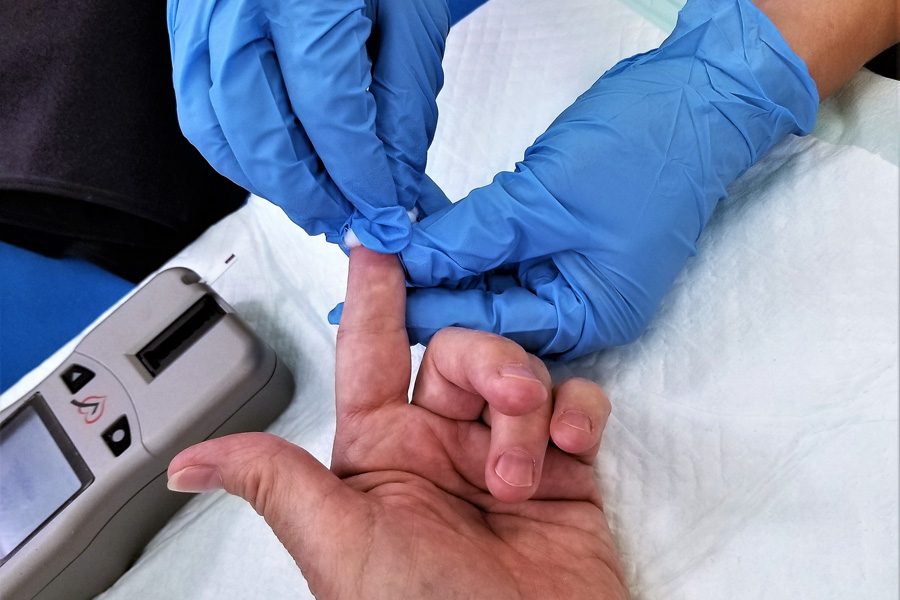
How to Build a POCT Program That Is Both Fast and Compliant
When a clinician can act on a test result during the patient visit instead of days later, patient care only improves. A medication dose gets adjusted on the spot. A worried patient leaves with an answer. The next step for the patient is more certain. That is the promise of point-of-care testing, and it is why so many physician office laboratories, pain management clinics, and startup diagnostic facilities want to add it.
There is a catch that trips up many facilities. Convenience at the point of care does not mean freedom from regulation. A test performed at the bedside or in the exam room carries the same CLIA obligations it would carry in a central laboratory, and those obligations depend on one thing that is easy to get wrong: the complexity of the test.
At Laboratory Management Consultants, point-of-care testing is not an afterthought. It is a key service we offer to help facilities build correctly from the start. We assist with device selection and validation, matching the menu to the correct CLIA certificate, writing the procedures, integrating results into the laboratory information system, and providing the ongoing director oversight that keeps a program compliant. This article walks you through how to stand up a point-of-care testing program that delivers the speed you want without the compliance problems.
What is Point-of-Care Testing?
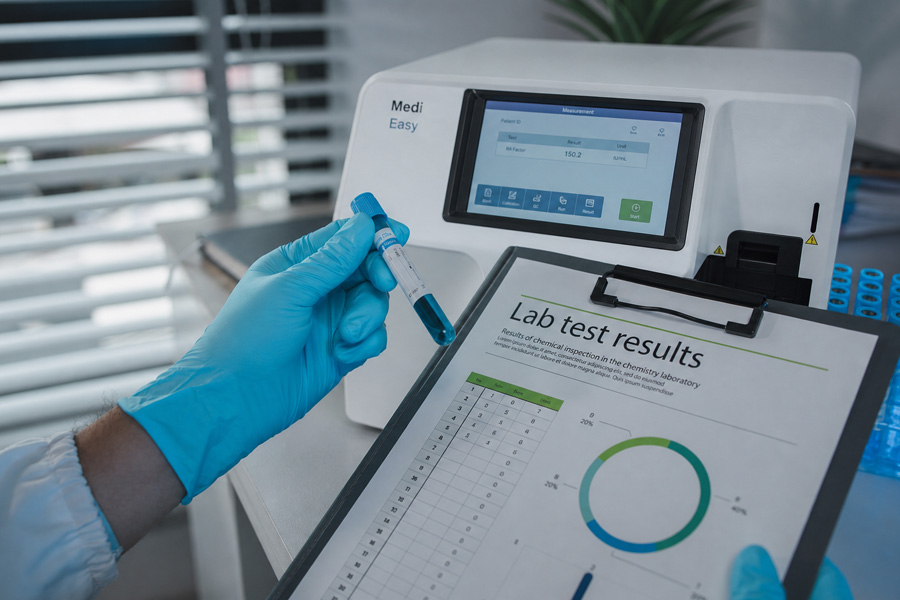
Point-of-care testing (POCT) is laboratory testing performed at or near the site of patient care rather than in a separate, centralized laboratory. Think of a rapid strep test run in the exam room, a glucose or A1c reading taken chairside, a urine drug screen performed in a pain management clinic, or a blood gas result generated at the bedside. The main feature is the location: the test happens where the patient is, and the result is available while the visit is still underway.
POCT adds the most value wherever a faster result changes what happens next. Common settings include physician office laboratories, urgent care centers, pain management and addiction clinics, long-term care facilities, and startup diagnostic sites building an in-house menu for the first time.
Of course, POCT comes with a big responsibility. Before a single sample is run, the facility has to answer a question that determines nearly everything else about the program.
The Biggest Misconception: Point of Care Is a Location, Not a Complexity Level
Many owners assume that “point of care” means “CLIA-waived.” It does not. Point of care describes where a test is performed. Complexity describes how much regulatory oversight the test requires. Those are two different things, and missing that point is the biggest mistake a new point of care program can make.
CLIA sorts every test into one of three complexity tiers: waived, moderate complexity, and high complexity (moderate and high complexity together are referred to as non-waived testing).
Some point-of-care devices are waived, but technology has moved well past the days when everything at the bedside was simple. Many moderate complexity and even high complexity analyzers now run at the point of care, and a test cannot be assumed waived simply because it runs near the patient.
The complexity of each device drives every downstream requirement: which CLIA certificate you need, whether proficiency testing applies, how quality control works, and what personnel and competency rules you must meet.
Let’s go over that again, because it’s so important: complexity is assigned to a specific test system, not to a test type in general. The same analyte can be waived on one manufacturer’s platform and moderate complexity on another. That is why the first and most important step is confirming the exact status of each device you plan to use, using the FDA CLIA database rather than an assumption. Getting this right at the outset prevents an expensive correction later.
Matching Your POCT Menu to the Right CLIA Certificate
Once you know the complexity of each device on your menu, you can select the correct CLIA certificate. The certificate is not paperwork you file and forget; it defines the compliance framework your facility operates under.
- Certificate of Waiver: A site performing only waived tests needs a Certificate of Waiver. The core obligations are to follow the manufacturer’s instructions for each test exactly, enroll in the CLIA program, and pay the certificate fee, which renews on a two-year cycle. There is no mandated proficiency testing and no routine inspection, though those trade-offs come with narrow conditions discussed below.
- Certificate of Compliance or Certificate of Accreditation: The moment your menu includes any non-waived (moderate or high complexity) point-of-care testing, you move into a different regime. A Certificate of Compliance applies when CMS or its state agency inspects the laboratory directly; a Certificate of Accreditation applies when a CMS-approved accrediting organization such as COLA or CAP performs the inspection. Either way, the full CLIA quality system now applies: proficiency testing, quality control, personnel qualifications, and competency assessment.
The practical takeaway: adding any non-waived (moderate or high complexity) testing requires the facility to hold a Certificate of Compliance or Certificate of Accreditation. This subjects the non-waived portion of the menu to full CLIA quality system requirements (proficiency testing, QC, personnel, competency), while waived tests continue under their lighter rules—but the laboratory as a whole operates under the higher certificate type.
Planning for that in advance, rather than discovering it during a survey, is what separates a smooth launch from a scramble.
For context on how certificate selection fits into a broader startup, see our Laboratory Setup & Accreditation Guide.
Quality Control for POCT, Including the IQCP Option
For waived tests, quality control means following whatever the manufacturer’s instructions specify, no more and no less. For non-waived point-of-care devices, CLIA sets a clear default and offers a flexible alternative.
The default CLIA requirement for non-waived testing is to run at least two levels of external control materials on each test system for each day of testing (or per applicable specialty/subspecialty rules), along with following manufacturer instructions.
For many point-of-care devices, especially unit-use cartridges and single-use test strips, running two levels of liquid control every day is impractical and expensive. This is where the Individualized Quality Control Plan comes in.
The Individualized Quality Control Plan (IQCP) is an alternate quality control option that CMS allows under 42 CFR 493.1250 for non-waived testing. Instead of a one-size-fits-all daily control regimen, an IQCP lets the laboratory tailor its quality control to the specific device, environment, specimens, and personnel, as long as the plan delivers equivalent quality. An IQCP has three required parts:
- Risk Assessment: A structured evaluation of where errors could occur across the entire testing process, from specimen collection through reporting, given your device, reagents, environment, and staff.
- Quality Control Plan: The set of practices and control activities you put in place to reduce the risks the assessment identified, designed to keep results accurate and reliable for patient care.
- Quality Assessment: The ongoing monitoring that confirms the plan is actually working, with adjustments when it is not.
An IQCP is voluntary, and it requires laboratory director approval before it takes effect. It is widely used for unit-use POCT devices precisely because running liquid controls on every cartridge is not feasible. Done well, an IQCP is not a shortcut around quality control; it is a documented, risk-based demonstration that your control strategy fits the device you are actually using.
Common POCT Pitfalls and How Surveyors Find Them
Point-of-care testing turns into a citation through a predictable set of errors. Knowing where surveyors look is the fastest way to stay clear of trouble:
- Not following the manufacturer’s instructions: This is the single most common problem at waived sites and the issue inspectors flag most often. Following the instructions means following the entire package insert, from intended use to limitations of the procedure, including the approved specimen type. Testing a specimen type the insert does not list can push a “waived” test outside its waived status entirely.
- Untrained or undocumented operators: At the point of care, testing is often performed by nurses and medical assistants rather than dedicated laboratory staff. Without documented training and, for non-waived testing, competency assessment, even a capable operator becomes a finding on paper.
- Expired reagents and improper storage: Test strips and cartridges are sensitive to temperature and humidity, and they expire. Expired reagents, unlogged storage conditions, and reagents kept outside their labeled range are frequent and avoidable citations.
- Missing or incomplete records: Quality control logs, lot numbers, expiration dates, and patient results all need to be recorded and retained. When a complaint triggers a visit, your records are the primary evidence that you followed the manufacturer’s instructions.
- Gaps in capturing results: Results that live only on a device screen or a handwritten slip are results waiting to be lost or mistranscribed. Incomplete result capture undermines both patient care and the documentation trail a surveyor expects.
One point is widely misunderstood: a Certificate of Waiver site is not subject to routine, scheduled inspections. However, CMS or the state agency can conduct a survey in response to a complaint, evidence of testing beyond the certificate’s scope, or risk of patient harm. Following the manufacturer’s instructions exactly, with complete records, is the best protection. The absence of a scheduled survey is not a reason to run a loose program.
Connectivity: Getting Results Into the Record
A point-of-care result only helps if it reaches the patient record cleanly and reliably. Manual logging, transcribing a number from a device screen into the chart, is one of the most error-prone steps in the entire workflow, and it is one that technology can largely eliminate.
Modern point-of-care programs connect devices to the laboratory information system (LIS) or electronic health record through data connectivity and middleware. Done right, connectivity delivers several benefits at once:
- Automated result capture: Results flow from the device into the record without a person retyping them, which removes a major source of transcription error.
- Operator lockout: Middleware can require a valid, competency-verified operator ID before a device will run, enforcing training and competency at the moment of testing rather than after the fact.
- Cleaner documentation: Connectivity timestamps results, ties them to the operator and device, and creates the kind of complete, defensible record that surveyors look for.
Laboratory Management Consultants works with multiple laboratory information systems, so we can help select and configure connectivity that fits your devices and your workflow rather than forcing your workflow to fit the software.
Building POCT Into Daily Operations
A point-of-care program succeeds when compliance is built into routine operations rather than bolted on for inspection season. A few practices make that happen:
- Operator training and competency: Train every operator to the manufacturer’s instructions, and for non-waived testing, assess competency on the schedule CLIA requires. Point-of-care operators are often clinical staff, so the training program has to reach beyond the traditional laboratory bench.
- Document control: Keep procedures, quality control records, maintenance logs, and lot documentation current and organized, so the right version is always in use and the records are ready before anyone asks.
- An oversight cadence: Establish a regular rhythm of review with laboratory director sign-off, so problems surface early and the director’s involvement is documented, not assumed.
- A plan for growth: When a waived site adds moderate complexity testing, it crosses into a heavier compliance tier that brings proficiency testing, personnel, and quality control obligations. Planning that transition in advance keeps a growth step from becoming a compliance gap.
Handled this way, point-of-care testing stops being a compliance worry and becomes exactly what it should be: a fast, reliable extension of your laboratory that patients and clinicians can trust.
How LMC Helps
Laboratory Management Consultants builds point-of-care testing programs that are fast to launch and built to pass inspection. Our POCT services cover the full path from device selection to ongoing oversight:
- Device selection and validation: We help you choose point-of-care devices that fit your menu and your setting, and we validate them so they perform as expected before they touch a patient sample.
- Correct certificate guidance: We determine the complexity of each device and match your menu to the right CLIA certificate, so you are neither over-certified nor operating outside your certificate’s scope.
- Customized policies and procedures: We write POCT procedures and quality control documentation tailored to your specific devices and workflow, including IQCP development where it fits.
- Laboratory information system integration: Drawing on our work with multiple laboratory information systems, we help connect your devices for clean, automated result capture and operator lockout.
- Operator competency support: We build the training and competency framework that keeps clinical staff qualified to perform non-waived point-of-care testing.
- Ongoing director oversight: Through our Laboratory Director Services, we provide the meaningful, documented director involvement that CLIA expects and surveyors verify.
Our work draws on decades of combined experience across physician office labs, pain management and addiction clinics, and startup diagnostic facilities, along with direct relationships with instrument companies. The result is a point-of-care program that is quick to stand up and steady under inspection.
Frequently Asked Questions
Does point-of-care testing require a CLIA certificate?
Yes. Any facility that performs laboratory testing on humans for diagnosis, prevention, or treatment needs a CLIA certificate, and that applies to point-of-care testing regardless of how few tests you run and even if you do not bill for them. The type of certificate you need depends on the complexity of the tests on your menu, from a Certificate of Waiver for waived-only sites to a Certificate of Compliance or Accreditation once non-waived testing is involved.
Does “point of care” mean the test is CLIA-waived?
No. Point of care describes where a test is performed, not how complex it is. Some point-of-care devices are waived, but many are moderate or high complexity. Complexity is assigned to a specific test system, so the same analyte can be waived on one platform and non-waived on another. Always confirm the exact status of each device rather than assuming a bedside test is waived.
What is an IQCP, and does my POCT program need one?
An Individualized Quality Control Plan (IQCP) is an alternate quality control option that CMS allows under 42 CFR 493.1250 for non-waived testing. It has three parts (a risk assessment, a quality control plan, and quality assessment) and requires laboratory director approval. An IQCP is voluntary; the default alternative is running two levels of external control on each test system every day of testing. IQCP is widely used for unit-use point-of-care devices where daily liquid controls on every cartridge are impractical.
Will my facility be inspected if we only perform waived point-of-care testing?
Waived sites are not subject to routine, scheduled inspections, but they can be surveyed under specific circumstances: in response to a complaint, when there is evidence of testing beyond the certificate’s scope, or when there is a risk of patient harm. The most common problem found in those situations is failure to follow the manufacturer’s instructions, which makes complete records and correct procedures your best protection.
How does LMC help set up a point-of-care testing program?
Laboratory Management Consultants handles the full setup: device selection and validation, matching your menu to the correct CLIA certificate, writing customized POCT policies and procedures (including IQCP development), integrating results into your laboratory information system, building operator competency, and providing ongoing laboratory director oversight. We help you launch quickly while keeping the program inspection-ready.
Bring Speed to the Point of Care Without the Compliance Risk
Point-of-care testing can transform how your facility delivers care, but only when the program is built on the right certificate, the right quality control, and the right oversight. Get those foundations right and POCT becomes a durable advantage instead of a survey liability.
Contact Laboratory Management Consultants today at (606) 487-0523 or email service@emaillmc.com for a free consultation on your point-of-care testing program.
Whether you are adding a single waived test in the exam room or standing up a full non-waived point-of-care menu, the right setup keeps your results fast, your records clean, and your certificate secure.
Related Resources from LMC
Laboratory Setup & Accreditation Guide
Common COLA and CAP Inspection Deficiencies
Laboratory Staff Competency Assessment Guide
Customized Policy and Procedure Manuals